
How to get a backlink from GitHub Pages?
GitHub Pages is best treated as a way to publish a real static page that happens to include your link. The backlink comes from the renderd github.io site, not from a GitHub repository README or issue thread.
Method 1: Publish a user site on github.io
- Sign in to GitHub and open New repository.
- Create a public repository named
username.github.io, replacingusernamewith your GitHub username. - Add an
index.html,README.md, or Jekyll site with a useful page about your project, portfolio, docs, or resource. - Add your backlink in the page content where it helps the reader. Do not publish a page that is only a list of promotional links.
- Open the repository’s Settings, then Pages.
- Under Build and deployment, choose the branch or workflow that publishes the site.
- Visit
https://username.github.io/after GitHub finishes publishing.
An example public GitHub Pages site with rendered outbound links: https://chan150.github.io/
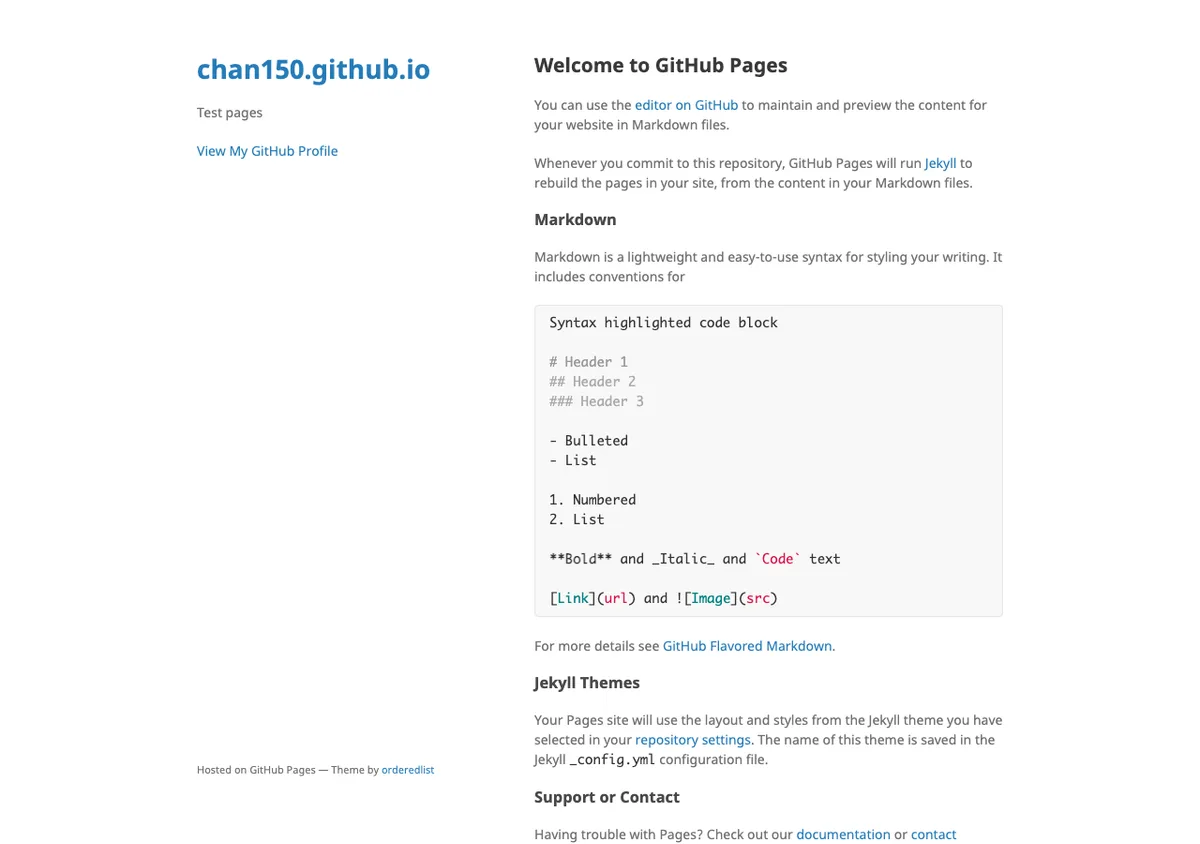
The rendered page can include ordinary HTML links because GitHub Pages serves your static site. That is different from adding a link to GitHub-hosted Markdown on github.com, where user-generated content may be treated differently.
Method 2: Publish a project site
Use a project site when the backlink belongs with a specifc repository, open-source tool, template, documentation page, or demo.
- Create or open the project repository.
- Add a static documentation or landing page that explains the project.
- Put the backlink in the relevant page section, such as a demo, homepage, sponsor, documentation, or author link.
- Open Settings > Pages and choose the publishing source.
- Use the published URL, usually
https://username.github.io/repository-name/, as the public page.
Project sites are better when the link has context. A bare page made only to point at a commercial homepage is easy to spot and not worth much.
Link quality notes
For the recommended Pages method, the link is controlled by the HTML you publish and can be dofollow. The real catch is quality and intent: GitHub Pages is a static hosting product, so use it for a portfolio, docs page, project demo, or useful resource. If the page exists only to manufacture a backlink, it is unlikely to earn traffic, trust, or long-term value.
One detail to set expectations: github.io is on the Public Suffix List, so every username.github.io site should be treated like its own hosted site. A fresh subdomain does not inherit the authority of the root github.io domain that you may see quoted in SEO tools. The link from a brand new Pages site starts effectively from zero, and its value grows with the page’s own content, traffic, and inbound links over time.
Backlink signals
Editorial estimates for comparing this provider.
- Dofollow linksCan pass equityWe set this after checking whether the recommended backlink method on this provider typically outputs a dofollow link in the page HTML. If attributes vary by page type, we use the realistic default for that path and explain the nuance in the guide.
- Yes. We set this after checking whether the recommended backlink method on this provider typically outputs a dofollow link in the page HTML. If attributes vary by page type, we use the realistic default for that path and explain the nuance in the guide.
- Backlink valueEditorial estimateBacklink value is our 0-100 editorial estimate of how much authority a page you create here would actually carry. We score the page you would end up with - not the provider homepage - from how strongly the platform links to and indexes that page type, how much editorial review stands behind it, and what comparable pages are worth in practice. Most new pages anywhere are worth little; a few platforms hand a fresh page real strength straight away. It is a comparison estimate, not a measurement, and it will not match any third-party tool.
- 2/100. Backlink value is our 0-100 editorial estimate of how much authority a page you create here would actually carry. We score the page you would end up with - not the provider homepage - from how strongly the platform links to and indexes that page type, how much editorial review stands behind it, and what comparable pages are worth in practice. Most new pages anywhere are worth little; a few platforms hand a fresh page real strength straight away. It is a comparison estimate, not a measurement, and it will not match any third-party tool.
- Spam ratingLower is betterWe use spam score when we have a defensible value for the relevant domain or surface, otherwise a conservative Backlink Badger editorial estimate from platform quality and spam patterns. Treat it as an approximate comparison guide, not a guarantee of how search engines evaluate the site.
- 2/100. We use spam score when we have a defensible value for the relevant domain or surface, otherwise a conservative Backlink Badger editorial estimate from platform quality and spam patterns. Treat it as an approximate comparison guide, not a guarantee of how search engines evaluate the site.
- Acquisition difficultyLower is easierBacklink Badger assigns this 0–100 score from editorial review of signup friction, content requirements, approval gates, and account trust for the recommended path. It is an approximate comparison estimate, not a measured difficulty metric.
- 40/100. Backlink Badger assigns this 0–100 score from editorial review of signup friction, content requirements, approval gates, and account trust for the recommended path. It is an approximate comparison estimate, not a measured difficulty metric.
- Time estimateTypical setupWe estimate the minimum minutes a prepared user needs to sign up, set up, and publish or submit the backlink, including obvious waiting steps we can reasonably predict. This Backlink Badger estimate is approximate - your first attempt or extra verification may take longer.
- ~60 min. We estimate the minimum minutes a prepared user needs to sign up, set up, and publish or submit the backlink, including obvious waiting steps we can reasonably predict. This Backlink Badger estimate is approximate - your first attempt or extra verification may take longer.
- Free optionNo required spendWe mark Yes when the recommended backlink path can be completed without paying the provider for access, placement, or a required plan. If only paid tiers unlock the link, or payment is commonly required in practice, we mark No.
- Yes. We mark Yes when the recommended backlink path can be completed without paying the provider for access, placement, or a required plan. If only paid tiers unlock the link, or payment is commonly required in practice, we mark No.
- Linking domainsExternal signalWhen shown, this optional count comes from SEO research on the provider or relevant backlink surface and is rounded with a ~ prefix on the page. It is a Backlink Badger estimate for comparison and may be outdated or imprecise versus live crawlers.
- ~150. When shown, this optional count comes from SEO research on the provider or relevant backlink surface and is rounded with a ~ prefix on the page. It is a Backlink Badger estimate for comparison and may be outdated or imprecise versus live crawlers.
- Ranking keywordsExternal signalWhen shown, this count reflects researched ranking-keyword data for the provider domain or surface, displayed as an approximate ~ value. Treat it as a Backlink Badger comparison estimate that can drift as indexes and rankings change.
- ~500. When shown, this count reflects researched ranking-keyword data for the provider domain or surface, displayed as an approximate ~ value. Treat it as a Backlink Badger comparison estimate that can drift as indexes and rankings change.
- Inbound linksExternal signalWhen shown, this is an optional researched count of inbound links to the provider or relevant surface, formatted as an approximate estimate. Backlink Badger includes it only when defensible - it is not live-crawled data.
- ~2,000. When shown, this is an optional researched count of inbound links to the provider or relevant surface, formatted as an approximate estimate. Backlink Badger includes it only when defensible - it is not live-crawled data.
- Outbound linksExternal signalWhen shown, this optional count estimates outbound links from pages on the provider domain to other sites, included only when researched and defensible. It is a Backlink Badger approximate comparison figure, not a real-time crawl.
- ~1,000. When shown, this optional count estimates outbound links from pages on the provider domain to other sites, included only when researched and defensible. It is a Backlink Badger approximate comparison figure, not a real-time crawl.
Provider overview
GitHub Pages publishes static websites from GitHub repositories on a github.io subdomain or a custom domain. It can host portfolio pages, project docs, small landing pages, and other static content with ordinary outbound links.
Minimum requirements to get a backlink from GitHub Pages
- GitHub account
- Public repository (free plan) or paid plan for private
- Static page content
- Basic Git or web editor access
Key challenges to get a backlink from GitHub Pages
GitHub Pages is useful only when you can publish a legitimate static page, not when you need a quick profile field. The setup requires a GitHub account, a repository, public content for the free path, and enough care that the page does not look like a throwaway link page. New or edited pages can also take a few minutes to publish.